
Chevron Gas Costs: Crude Oil, Petroleum Reserves, and Your Fuel Receipt
Separate oil-market concepts from your own pump purchase, work through a fuel budget, and organize confirmed receipt details.
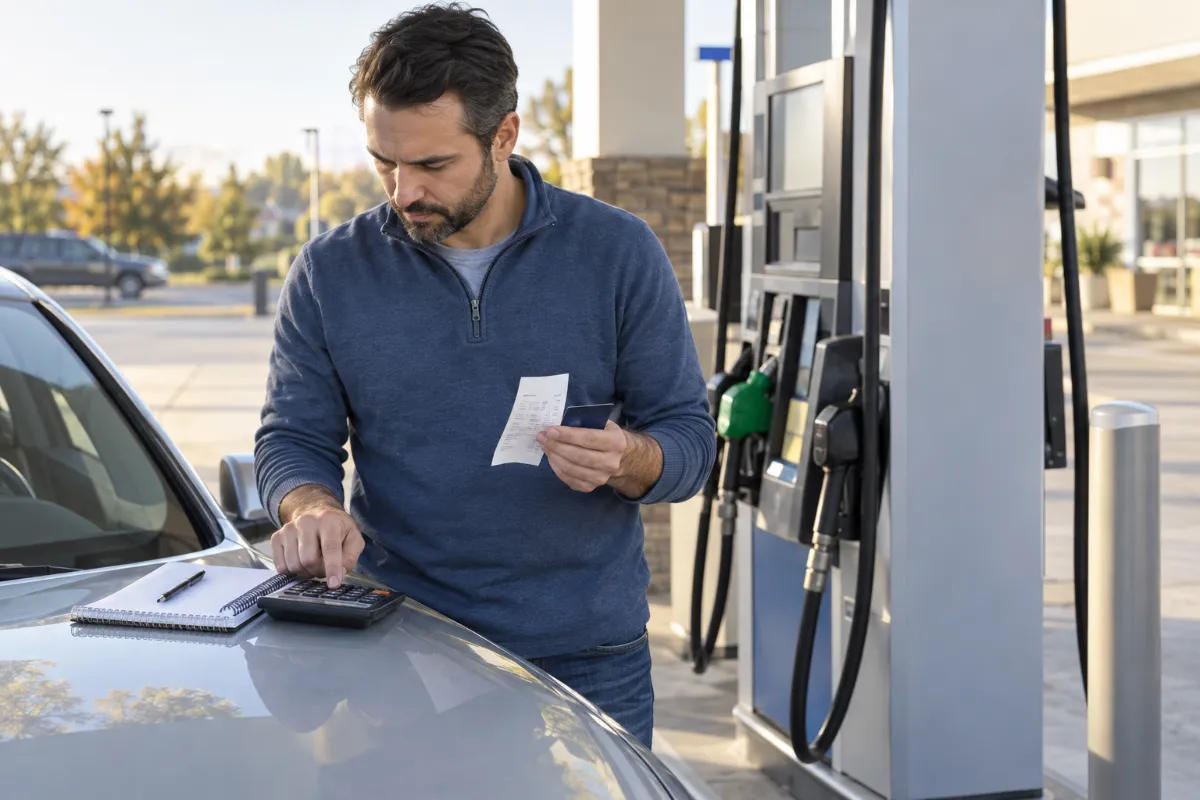
A fuel receipt records one purchase. A headline about oil reserves describes a very different part of the energy system. Understanding both helps you read price news without confusing a national statistic with the price at your local Chevron station.
This guide covers U.S. gasoline and uses U.S. dollars and U.S. gallons. Official sources were checked on October 6, 2026. The budget below is hypothetical, not a current Chevron price quote.
Recover the original fuel receipt first
If the pump did not print or the paper is missing, ask the station whether it can provide the transaction record. Have the location, date, approximate time, pump number if known, and purchase amount ready. Provide only the payment details the station actually needs; do not send a full card number through an unsecured message.
Chevron's official U.S. station inquiry page provides a station selection field and requests the transaction date, with a purchase-amount field. It is a contact route, not a promise that every lost receipt can be retrieved. If you paid through an account or app, also check the records available in that service.
A bank entry may confirm an amount paid, but it does not establish the fuel grade or gallons purchased. Keep those fields unknown unless you can confirm them from a reliable record.
What goes into a gallon's price?
EIA groups U.S. retail gasoline prices into four components:
- Crude oil: the raw-material cost, generally the largest component; its share changes over time and by region.
- Refining: processing costs and margins, affected by season, region and required fuel formulations.
- Distribution and marketing: moving fuel to terminals and stations, plus retail operating costs and margins.
- Taxes: federal, state and sometimes local charges.
EIA reports a U.S. federal gasoline tax of 18.40 cents per U.S. gallon. Its January 2026 average for state gasoline taxes and fees is 33.55 cents per U.S. gallon; local or sales taxes may add more. These are tax figures, not a pump-price estimate or a tax rate inferred from your receipt. EIA: factors affecting gasoline prices.
A crude-price headline alone therefore cannot tell you what a particular station will charge. Read the posted price for your chosen grade and payment method, and retain the actual transaction record.
Three meanings that should stay separate
Proved reserves: recoverable resources
EIA defines proved energy reserves as quantities supported by geological and engineering evidence that can be recovered with reasonable certainty under existing economic and operating conditions. They are estimates of recoverable resources, not barrels already sitting in a storage tank. A reserves figure is not a countdown to a fixed date when oil disappears. EIA: proved reserves glossary.
Commercial inventories: fuel already stored
Inventories, also called stocks, are fuel held for future use. EIA's stocks definitions specify a reporting date, such as the end of a week or month. When comparing inventory reports, match the product, geographic area, units and reporting period. A gasoline inventory is different from a crude-oil inventory; neither is the same measure as underground proved reserves. EIA: petroleum stocks definitions.
Strategic Petroleum Reserve: an emergency crude supply
The U.S. Strategic Petroleum Reserve is federally owned emergency crude oil held in underground salt caverns. DOE describes its purpose as reducing the impact of petroleum supply disruptions and meeting U.S. international energy obligations. Its release authorities have specific conditions. It is not a stock of ready-to-pump Chevron gasoline, and its name does not make it a measure of all recoverable oil underground. DOE: Strategic Petroleum Reserve.
These distinctions are useful when reading news: first ask whether a number describes recoverable resources, commercial storage, or the emergency reserve. Then check its date and scope before relating it to your own spending.
A hypothetical fuel budget you can reproduce
Assume one purchase of 15 U.S. gallons at $4.20 per gallon, once each week for 52 weeks. Ignore separate fees, discounts and non-fuel purchases for this example.
- One fill: 15 × $4.20 = $63.00.
- Annual fuel spending: $63 × 52 = $3,276.
- Average monthly budget: $3,276 ÷ 12 = $273.
If the assumed price rises by $0.25 per gallon while volume and frequency stay unchanged, each fill costs $3.75 more, or $195 more per year. This is a sensitivity calculation, not a forecast.
For your own budget, replace both the price and gallons with confirmed purchases. A larger bill might reflect more gallons, a different grade, or another item on the same receipt. Comparing total dollars alone can hide those differences.
Organize a Chevron fuel record in CMR
Use the Chevron receipt template to format a personal record from confirmed details. Replace its example text and amounts; a preset is not evidence of your purchase or a current station price.
- Keep the station-issued receipt or recovered transaction document as the source.
- Record the station location, purchase date, fuel grade, gallons, unit price and final total when confirmed.
- Separate fuel from snacks, a car wash or other purchases so your fuel comparison remains meaningful.
- Preserve the source of each detail in a note. Do not invent a missing tax breakdown merely to make fields look complete.
- Save your editable record in CMR Vault. Use the available CSV/XLSX or expense report workflow when you need a comparable record set.
A simple naming pattern is “2026-10-06 — station location — fuel.” For a spreadsheet, keep separate columns for gallons, price per gallon and fuel total. Mark missing values explicitly rather than treating an unknown volume as zero. Check each row against its source before using it in a budget.
CMR creates a personal record, not a merchant-issued original, and does not guarantee reimbursement. If an employer or another recipient requires evidence, confirm its requirements and retain the original document.
Prepared with AI assistance and checked against the linked official sources on October 6, 2026. The editorial image is an original AI-generated illustration of a generic station; it does not depict a specific Chevron location.