Shared Restaurant Receipts: Split Bills, Tips and Clear Purchase Records
One dinner can produce an itemized check, several payment slips and repayments between friends. Keep the original purchase and each person’s share understandable.
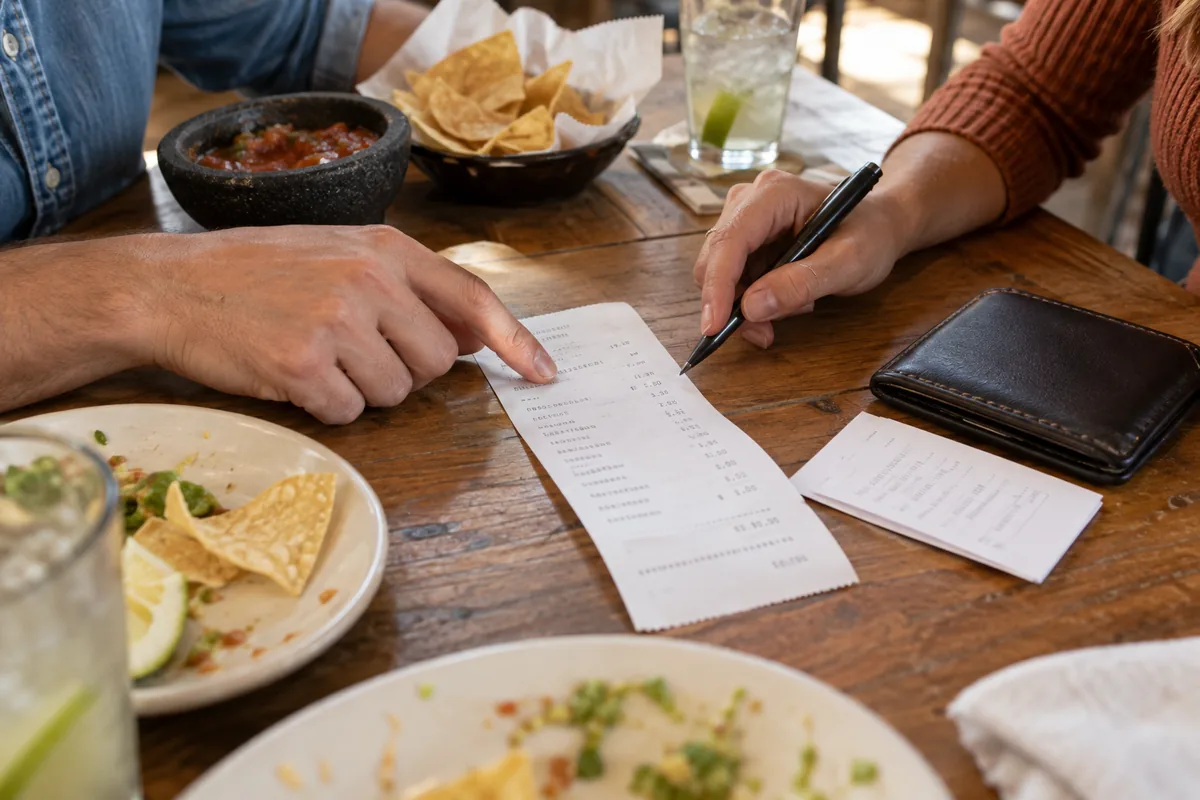
A shared dinner is simple until you try to remember who paid, whether the tip was included and how much each person owes. The itemized check explains the meal. A payment slip explains a payment. A transfer from a friend explains a repayment. Keeping those documents distinct makes the whole evening easier to reconcile.
Start by requesting the restaurant’s original itemized receipt and the final payment record. For a meal at El Torito, ask the location where you dined. This guide focuses on shared-bill organization rather than menu prices, promotions or a promised receipt-reprint policy.
Recover the restaurant’s original record first
Before leaving, check that the itemized receipt covers the food, drinks, discounts and any separately recorded charges. If you paid through more than one payment method, keep the relevant slips together. Ask for clarification while the staff can still identify the check.
If the paper receipt is lost or damaged, contact the restaurant with the approximate purchase date, location, paid amount and any check reference you retained. Ask whether an original copy or available transaction record can be recovered. Do not send full payment-card numbers through an ordinary message.
Use El Torito’s official contact page for the chain’s published feedback and general inquiry options. Confirm the restaurant identity before contacting it; other businesses may use similar names. The contact page is a way to ask for assistance, not a guarantee that a particular receipt can be reprinted.
If someone else paid, ask that person to share the original record. A bank statement can confirm a charge without establishing every meal item, tax amount or tip. Keep whatever original documents survive.
Match the itemized check to the completed payment
An itemized check may show the balance before you add a tip. A card slip may show an authorization or a space for writing a tip. Review the completed payment information rather than assuming every printed total represents the same stage.
Keep these details together when confirmed:
- The food-and-drink subtotal and any discount.
- Tax and separately charged fees or service charges.
- The tip actually paid and the completed payment total.
- Each payment amount when the check was split.
Compare your records with the finalized merchant or payment information available to you. If a charge differs from what you expected, ask the restaurant about it. Leave an unresolved difference visible in your notes instead of changing a number to make the record balance.
Suggested tips are different from tips paid
A suggested tip printed on a receipt is a choice offered to the diner. It is not evidence that the amount was paid. Record the actual tip you can confirm.
If a service charge appears, keep its printed description and ask the restaurant how it relates to the final amount. Do not assume it is an additional voluntary tip or count it again under another label. This article does not assert an automatic gratuity rule for El Torito.
A cash tip may be separate from a card payment. For example, if a finalized card payment is $88 and you can confirm a $16 cash tip, the recorded meal cost is $104. Do not also put that $16 into the card payment amount. If the tip is unknown, mark it unresolved instead of selecting one of the suggested amounts.
A hypothetical four-person dinner
Imagine a meal with a confirmed $80 food subtotal, $8 tax and $16 tip. These are illustrative values, not El Torito prices or a legal tax-rate claim. The final meal cost is $104.
If four diners agree to share the full cost equally, each share is $104 ÷ 4 = $26. When one person pays the restaurant the entire $104, the other three might repay $26 each, totaling $78. The payer’s personal share is then $104 − $78 = $26.
Keep the restaurant purchase of $104 and the three repayments of $26 understandable in separate records. A repayment between friends is not another restaurant purchase. Adding $104 and $78 as restaurant spending would double-count money associated with the same dinner.
If the restaurant instead charges four cards $26 each, each diner’s payment record is $26. Retain the $104 group check as supporting context without also entering it as a second personal payment.
Equal division is only one agreement. If people pay for their own items, record the agreed allocation of tax, shared food and tip alongside the original check. Your allocation explains your share; it does not rewrite the restaurant’s document.
Store receipts so the dinner is easy to find
Use a consistent folder or record name, such as the date, restaurant and a short meal reference. Keep the merchant’s document intact and place your personal allocation notes beside it.
Preserve a readable photo of fading paper while it is still legible. Include the full item list and totals in the image. Keep each payment slip associated with the same meal so it does not become a second unexplained expense later.
If a refund is subsequently confirmed, retain its separate record and connect it to the purchase. Avoid silently replacing the original meal total with a smaller amount; the purchase and later adjustment explain different events.
When an internal CMR record can help
After attempting original recovery, you can use the El Torito receipt template to recreate a personal record for internal organization from confirmed purchase details. Replace the fictional display values with your own information. The general receipt editor supports other restaurant layouts.
You can customize wording and field positions to keep the restaurant amounts readable. Keep unknown details unresolved, and retain your supporting documents and allocation notes. A user-created CMR record is not an El Torito-issued original and does not guarantee reimbursement or acceptance by another organization.
Export dining records to CSV or Excel/XLSX
CMR CSV export helps move confirmed purchase records into a spreadsheet for sorting by restaurant, date or meal purpose. Excel/XLSX export is also available with applicable paid export access. The expense report tool can help organize recorded purchases.
Review structured quantities, discounts, tax, fees, tip and total before exporting. Custom printed text and visual spacing do not automatically update the numeric data used by an export.
For shared meals, use separate spreadsheet columns or a companion sheet for the whole check, your actual payment, repayments and your agreed share. Do not sum those different views as if they were independent meals. Preserve original receipt files alongside your CSV or workbook so each entry remains traceable.
Quick questions
Is the itemized check the same as the card slip?
They can contain different information. Keep the itemized check for what was ordered and the completed payment record for what was paid. Match them to the same transaction.
Should I enter every suggested tip?
No. Enter only the tip actually paid and confirmed. Ask the restaurant to explain separately listed charges if you are unsure how the total was calculated.
Can I recreate a missing group-dinner record?
Try recovering the original first. If it is unavailable, a CMR template can help with internal organization using confirmed details. Keep your own allocation notes separate from the merchant document and avoid implying that the recreated record is merchant-issued.
Official El Torito contact source checked October 14, 2026.